
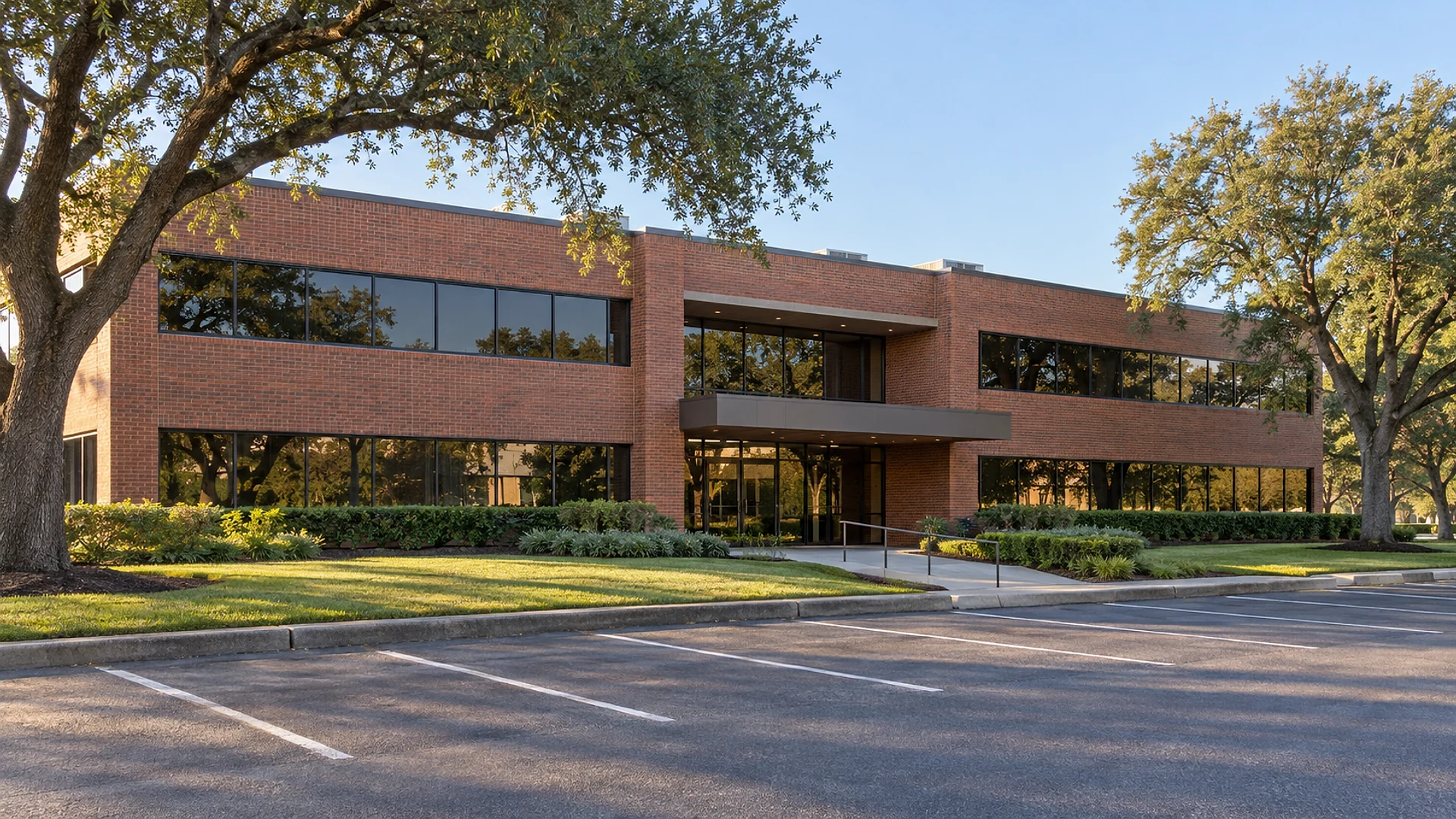
When you buy an existing office building in Houston for your own company, the feasibility period, usually 30–60 days, is when you check the building, the city records and the site, test whether your team fits, and price the fixes, all before your money is at risk. Most of the surprises in an older building sit in the same 8 places: the roof and cooling units, asbestos, the elevator, sprinklers and fire alarm, accessibility, parking, flood risk and the slab. Check them in order, and you'll know what you're really buying.
The feasibility period, sometimes called the option period or due diligence period, is the stretch written into your purchase contract when you can study the property and cancel without losing much more than a small fee. We run this work as a feasibility study for owner-users, which is the term for a company buying a building to occupy itself rather than to rent out. Every number in this article is a planning range, not a quote.
Key takeaways
- Treat the clock as the main risk. 30 days goes fast. Order the slow reports in week 1 and ask for 45–60 days if the building is older than about 1990.
- Ask the city what is on file. Houston issues a certificate of occupancy for a building's use. If you'll use it the same way, it can carry on; if you change the use, you'll need a new one.
- Asbestos comes before any renovation. Texas requires an asbestos survey before most renovation or demolition in commercial buildings, so book it now, not after closing.
- Price the fixes, not just the building. A roof, 2 cooling units and accessible restrooms can add a large sum on top of the purchase price.
- Test-fit your team before you close. A cheap building that can't hold your people, or your future people, isn't cheap.
- Typical feasibility period
- 30–60 days
- Places to check
- 8
- Reports to order
- 3–4
- Phase I report time
- 2–3 weeks
How long does due diligence on an office building take?
Most commercial purchase contracts in Texas give the buyer a fixed number of days to study the property. Owners often accept 30 because the seller asks for it, then find out an environmental report alone can take 3 weeks to arrive. If the building is more than 30 years old, ask for 45–60 days, or the right to extend once for a fee.
Here's how the work usually lines up when it runs in order. In practice we overlap the steps so the whole thing fits inside the period you've negotiated.
- 011–1 weeks
Documents and kickoff
Seller's files, survey, title report, past permits and repair records
- 022–3 weeks
Inspections and reports
Building walk-through, environmental report, asbestos survey, roof and equipment check
- 031–2 weeks
City records and flood check
Certificate of occupancy, open permits, flood map, deed restrictions
- 041–2 weeks
Test fit and cost range
Lay out your team and price the fixes
- 051–1 weeks
Decision and negotiation
Close, renegotiate the price or walk away
Planning ranges, not a project quote. Timing varies with owner decisions, project complexity, and jurisdiction workload.
Week 1: get the paper and order the slow reports
Ask the seller for everything: the floor plans, past permits, roof warranty, equipment service records, the elevator certificate, any past asbestos reports and utility bills for the last 12 months. The same week, order the reports that take longest: the environmental report, the land survey and the asbestos survey. If you wait until week 2, you may run out of time.
Weeks 2–3: walk the building with the right eyes
This is when the building gets inspected top to bottom. We walk it with our architecture and our structural and MEP engineering together, since they come from one team, so the roof, the walls, the cooling and the plumbing get looked at in the same visit. MEP means mechanical, electrical and plumbing: the air, power and water systems.
Weeks 3–4: city records, test fit and money
With the reports coming in, we check what the city has on file, lay your team out on the floor plans and turn every finding into a cost range. The last few days are for deciding.
What should you inspect in an older office building?
A typical older office building in Houston has 1 or 2 stories, a flat roof, rooftop cooling units, a parking lot out front and, if it has 2 floors, an elevator. That's a good building type for an owner-user. It's also a type with predictable weak spots.
The roof and cooling units
Flat roofs in Houston's sun and rain usually last about 15–25 years, and rooftop cooling units about 12–20. Ask how old both are, look for patched leaks and stained ceiling tiles inside, and get a roofer to walk the roof. If either is near the end of its life, that's a cost you will pay soon after closing.
Ceilings, floor tiles and asbestos
Buildings from before about 1990 often have asbestos in old floor tiles, the black glue under them, ceiling tiles, pipe wrap or spray-on fireproofing. It's usually harmless if left alone, but any renovation can disturb it. The Texas Department of State Health Services asbestos program requires an asbestos survey by a licensed inspector before most renovation or demolition in public and commercial buildings, and cities check for it before issuing permits.
An asbestos survey is a building check where a state-licensed inspector samples suspect materials and a lab tests them. Owners often leave it until they're ready to renovate. Do it during the feasibility period instead: if the building has a lot of asbestos in the areas you plan to change, removal can add weeks and real money to your move-in plan, and you want to know that before you close.
The elevator
A 2-story building with an elevator needs that elevator inspected every year. The Texas Department of Licensing and Regulation elevator program oversees the inspections. Ask for the current certificate and the last inspection report, and ask whether any upgrades are due. Older elevators sometimes need new controls or a new cab interior, and both take months to order.
Sprinklers and fire alarm
Find out whether the whole building has sprinklers, only part of it, or none. Many smaller older office buildings have no sprinklers at all. That can be fine for how the building is used today, but some changes, like adding a large training room or opening up walls, can trigger new requirements. Ask for the last fire alarm and sprinkler inspection reports too.
Restrooms, doors and the path from parking
Accessibility means the building can be used by someone in a wheelchair. Look at the parking spaces, the walkway, the front door, the restrooms and the drinking fountains. In Texas, renovation work above a set cost goes through a separate state accessibility review, which we explain in our article on TDLR accessibility review. If you plan to renovate, budget for bringing the restrooms and the path to them up to date.
Parking, flood risk and the slab
The last 3 checkpoints are outside or under the building. Count the parking spaces against how many people you'll have. Look up the flood map, ask about past flooding and get a survey. Then walk the slab for long cracks, doors that stick or floors that slope, which can mean the foundation has moved in Houston's clay soils.
What does the City of Houston have on file for the building?
This is the check most buyers skip, and it's free. Houston has no zoning, but it still has rules about how a building is used, and the paperwork has to match your plans.
The certificate of occupancy
The Houston Permitting Center's certificate of occupancy page says a certificate must be in place before a commercial building or lease space is occupied, or when the occupancy classification changes. A certificate of occupancy is the city's approval for a building to be used in a certain way, for example as offices. The city says the certificate stays valid as long as the same type of business uses the space.
So, if the building is offices now and you'll use it as offices, you're usually in good shape. If you want to use part of it differently, for example as a clinic, a training school or a showroom, that may be a change of occupancy and need a new certificate and an inspection. The city also notes that a certificate is issued only to the original applicant or their agent, so confirm with the city how to get one in your company's name.
Open permits and deed restrictions
Ask the city about any permits that were opened and never closed. An open permit for work that was never inspected becomes your problem after closing. Also read the deed restrictions in the title report. In much of Houston, deed restrictions play the role zoning plays elsewhere, and some limit building use, signs or parking.
Flood risk
Look the address up on the FEMA Flood Map Service Center and ask the seller directly about past flooding. If the building sits in a floodplain, large renovations can trigger rules to raise or protect the building. We cover how that works in our article on renovating in a Houston floodplain; the same rule of thumb about renovation cost and building value applies to offices.
Which findings should make you renegotiate or walk away?
Most findings just become a line in the budget. A few should change the deal. Swipe through the ones we treat as serious.
- 01
Roof and cooling at end of life
If both are near the end, expect to replace them in the first 1–3 years. Ask for a price cut or a credit at closing.
- 02
Asbestos where you plan to renovate
Removal adds cost and weeks before any work can start. Price it before you close, not after.
- 03
No sprinklers and a big change planned
Adding sprinklers to an entire building is a large job. Know whether your plans would trigger it.
- 04
Use doesn't match the certificate
If your use is different from what the city approved, budget for a new certificate, an inspection and possibly upgrades.
- 05
Flooding in the past
Ask how often and how deep. Past flooding affects your insurance, your renovation rules and your move-in risk.
- 06
Too few parking spaces
In a building surrounded by its own lot, there's often no room to add more. Check the count against your team.
None of these is a reason to panic. They're reasons to negotiate. Sellers often agree to a lower price or a repair credit when the buyer brings a clear, priced list instead of a vague worry.
What do common fixes cost in an older office building?
Here are rough ranges for the fixes we see most often, shown per square foot of the whole building so you can compare them with the purchase price. Your building may need none of these, or all of them.
On a 20,000 sq ft building, a new roof and new cooling units alone could add roughly $280,000–540,000. If you're comparing buying against building new, our breakdown of what it costs to build your own office in Houston gives you the other side of the math.
“The feasibility period is cheap.
Surprises after closing are not.”
Will your team actually fit in the building?
A building can pass every inspection and still be wrong for you. Before you close, lay your team out on the floor plans. This is called a test fit: a quick floor plan that shows your desks, offices, meeting rooms and support spaces inside the existing walls.
Count people and rooms, not just square feet
Start with how many people you have now and how many you expect in 5 years. Then list the rooms you need: private offices, meeting rooms, a break room, storage, a server closet. Our step-by-step guide to a test fit before an office lease works the same way for a purchase.
Look at the shape of the floor
Narrow floors, columns in odd places and a long, thin footprint can waste space. A 2-story building also splits your team between floors. The test fit shows whether the building's shape works with how your company actually works.
Turn the fit into a budget
Once the plan works, we price the interior work on top of the fixes above. Together they give you the true cost of moving in: purchase price, plus fixes, plus your own build-out.
What should be done before the feasibility period ends?
Use this as the closing list. If a box is still empty with 5 days left, ask for an extension or price the risk into your offer.
- Seller's plans, permits and repair records in hand
- Land survey and title report reviewed
- Environmental report (Phase I) received
- Asbestos survey done by a licensed inspector
- Roof and rooftop cooling units inspected
- Elevator certificate and last inspection report reviewed
- Sprinkler and fire alarm coverage confirmed
- Restrooms, doors and parking checked for accessibility
- Certificate of occupancy and open permits checked with the city
- Flood map checked and past flooding disclosed
- Test fit done for today's team and 5 years out
- Every finding turned into a cost range
The environmental report deserves its own note. A Phase I environmental site assessment is a study of past uses of the property and the area around it, to find signs of contamination. Following the federal All Appropriate Inquiries rule before you buy is what lets a buyer claim certain protections from cleanup costs later, so most commercial buyers order one even for a plain office building.
Questions owners ask before buying an office building
How long is a typical feasibility period on a commercial building?
Most commercial contracts in Texas give the buyer about 30–60 days. For an older building, 45–60 days is safer, because the environmental report, survey and asbestos survey can each take 2–3 weeks. If the seller insists on 30, ask for the right to extend once for a fee.
Do I need a new certificate of occupancy when I buy an office building in Houston?
Not always. The city says a certificate stays valid as long as the same type of business uses the space, so buying an office building to use as offices is usually fine. A change of use, like turning part of it into a clinic or training school, can mean a new certificate and inspection, so confirm with the city before you close.
Is an asbestos survey required before I renovate an office building in Texas?
For most renovation or demolition in commercial buildings, yes. The state requires a survey by a licensed inspector, and cities check for it before issuing permits. Doing it during the feasibility period tells you whether removal will affect your budget and schedule.
What does a building walk-through cover during due diligence?
A full walk-through looks at the roof, structure, walls, windows, cooling, electrical, plumbing, elevator, fire protection, accessibility and the parking lot. The goal is to find anything near the end of its life and put a cost range on it. We do it with architecture and engineering together, as one team.
Should I get a Phase I environmental report for a plain office building?
Usually, yes. Even a clean-looking office building can sit on land with a past use, like a gas station or dry cleaner nearby, that left contamination. A Phase I report done to the federal standard is also what protects a buyer from certain cleanup costs later.
How do I know if my team will fit in the building?
Do a test fit before you close. It's a quick floor plan that places your desks, offices, meeting rooms and storage inside the existing walls, for today's headcount and 5 years out. It also shows whether the building's shape wastes space.
Is it cheaper to buy an older office building or build a new one?
It depends on how much the older building needs. Buying is often faster and cheaper up front, but a roof, cooling units, asbestos removal and accessibility work can close the gap. Pricing the fixes during due diligence lets you compare the 2 honestly.
Can I use the inspection findings to lower the price?
Often, yes. Sellers are more likely to agree to a lower price or a credit at closing when you bring a clear list of findings with cost ranges. Vague concerns rarely move a seller; a priced list usually does.
Looking at an office building to buy?
If you're under contract on an office building, or about to be, send us the address, the closing date and how many people you need to house. We'll walk the building, check the city records and flood risk, test-fit your team and give you a priced list of findings before your feasibility period runs out. Our office sector work covers the full path from purchase to move-in. Start the conversation on our contact page.
